
Siem Reap
Siem Reap is a warm and welcoming city that greets travelers like old friends. Once the heart of the Khmer Empire from the 9th to the 15th centuries, the region is home to the legendary Angkor Wat Temple — a UNESCO World Heritage Site and the largest religious monument in the world. Nestled in the tropical jungle, Angkor stuns visitors with its soaring lotus-shaped towers and intricate stone carvings. While Siem Reap has its own charm, from vibrant night markets to lively cafés, Angkor remains the undeniable centerpiece. Yet, beyond the temples, echoes of traditional Cambodian life still resonate. Whether you’re wandering through bustling markets or hiking into the verdant countryside to discover hidden temples, Siem Reap offers a captivating blend of ancient wonder and authentic local culture.
Travel Guide
1. Transportation
1.2. How to Get to Siem Reap
Getting to Siem Reap is relatively straightforward, especially by air. Siem Reap International Airport, located just 20 minutes from the town center by tuk-tuk, offers flights to a wide range of destinations across Asia.
For those traveling overland, long-distance buses connect Siem Reap with neighboring countries like Laos, Thailand, and Vietnam, as well as Cambodia’s capital, Phnom Penh. The journey from Phnom Penh typically takes 6 to 8 hours by bus or private transfer.
1.3. Getting Around Siem Reap
Tuk-Tuk
The most popular way to get around Siem Reap is by tuk-tuk—also known locally as a moto-ramauk. These open-air, covered vehicles offer a breezy and affordable ride while shielding you from sun and rain. Tuk-tuks are everywhere, and you can either book one through your hotel or negotiate directly with drivers on the street.
💰 Cost: Around US$15–20 per day. Always agree on the price before your journey begins.
Taxi
If you’re looking for comfort and air-conditioning, a private taxi is a good option. You can book a taxi through hotels or travel agencies.
💰 Cost: Approximately US$30 per day, with an extra US$10 for trips to more remote temples.
Motorbike with Driver
Motorbikes are among the cheapest options, but foreigners are not allowed to drive within the Angkor Archaeological Park. However, you can rent a motorbike with a Cambodian driver, often arranged through your hotel.
💰 Cost: Around US$10 per day.
Bicycle
For independent travelers, renting a bicycle offers maximum freedom and is the most budget-friendly choice.
💰 Cost: Between US$2 and US$4 per day, depending on the bike’s quality.
Many temples—including Angkor Wat, Angkor Thom, Preah Khan, Prasat Ta Keo, Prasat Kravan, and Eastern Mebon—are within biking distance from town.
⚠️ Be sure to lock your bike when visiting temples (a lock is usually included). Keep in mind that cycling means full exposure to the sun, heat, dust, and occasional rain—especially during the hot season.
2. Best Time to Visit Siem Reap
Siem Reap has a classic tropical wet and dry climate, with a long rainy season and high humidity.
The best time to visit is between December and March, when temperatures range from 27°C to 32°C and rainfall is at its lowest. These months offer the most comfortable conditions for exploring Angkor’s temples and outdoor attractions.
Places Of Interest
Angkor Wat
Angkor Wat (meaning “Capital Temple”) is the largest religious monument in the world, spanning an astonishing 162.6 hectares. Just a 15-minute drive from Siem Reap, it’s incredibly accessible and awe-inspiring in scale and design. Its iconic five lotus-shaped towers rise 65 meters into the sky, symbolizing Mount Meru, the mythical center of the universe in Hindu cosmology.
This UNESCO World Heritage Site was once the heart of the ancient Khmer Empire and part of the largest pre-industrial city in the world. A visit to Angkor Wat is a must for anyone traveling to Cambodia—an unforgettable glimpse into the grandeur of Southeast Asia’s past and one of the world’s most remarkable ancient wonders.
Angkor Wat is the crown jewel of the vast Angkor Archaeological Park, which contains hundreds of ruins from the Khmer Empire. The best way to explore the site is by booking a guided tour through a reputable operator. A knowledgeable guide can help arrange entrance tickets, provide transportation, and offer fascinating historical insights.
Constructed in the early 12th century during the reign of King Suryavarman II, Angkor Wat was originally built as a Hindu temple dedicated to Vishnu. Scholars continue to debate whether its primary purpose was as a state temple or as the king’s funerary monument. Its construction involved over 50,000 artisans, laborers, and slaves, and it remains an enduring testament to the ingenuity and ambition of the Khmer civilization.
At its peak, the Khmer Empire stretched across much of modern-day Cambodia, Thailand, southern Vietnam, and Laos. Over a million people once lived in Angkor, making it one of the largest cities of its time.
Today, Angkor Wat stands as a powerful symbol of Cambodia and a stunning example of classical Khmer architecture—an essential experience for history lovers, spiritual seekers, and curious travelers alike.
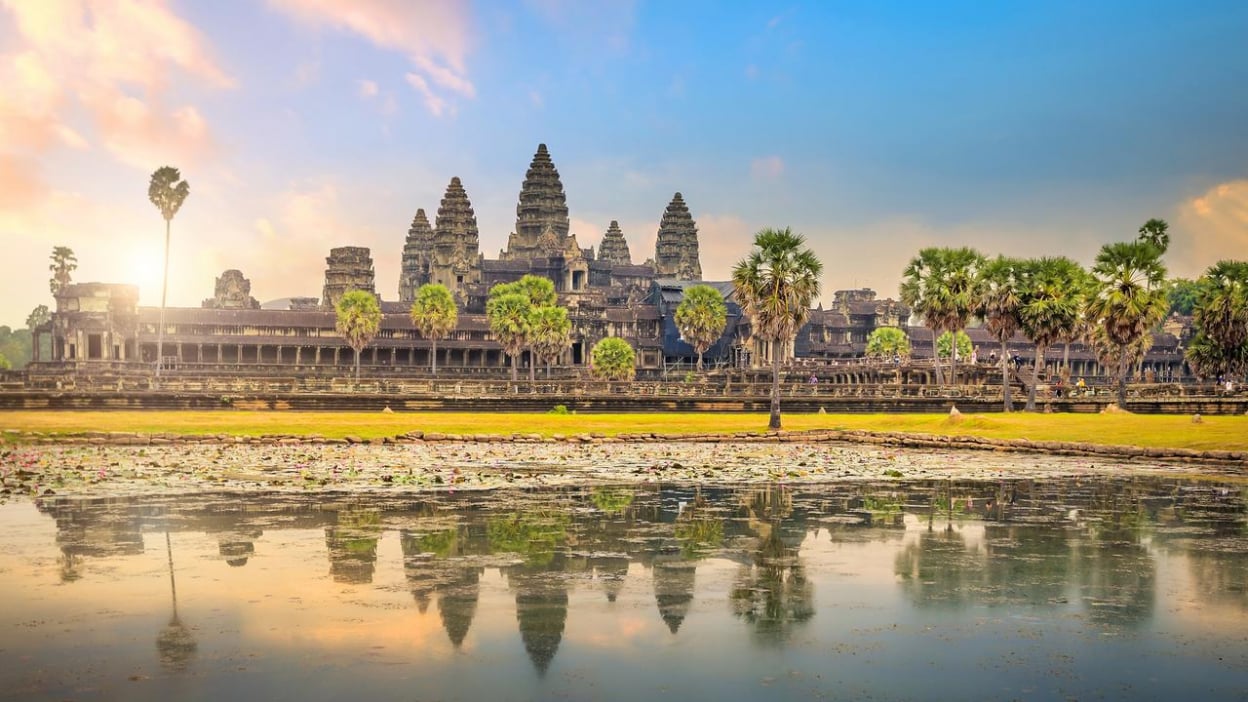
ANGKOR THOM
Angkor Thom, meaning “Great City,” was the final capital of the Khmer Empire, located on the west bank of the Siem Reap River. Constructed after the completion of Angkor Wat at the end of the 12th century, it spans an area of 9 square kilometers. In the 15th century, the city transitioned into a Buddhist temple complex.
Following his victory over the Cham invaders in 1181 and the recapture of the Angkorian capital, King Jayavarman VII initiated an ambitious building campaign across his kingdom. He established Angkor Thom as the new capital, incorporating the Baphuon and Phimeanakas temples, which had been part of the city’s earlier structures. At its peak, the population of Angkor Thom is believed to have been nearly one million.
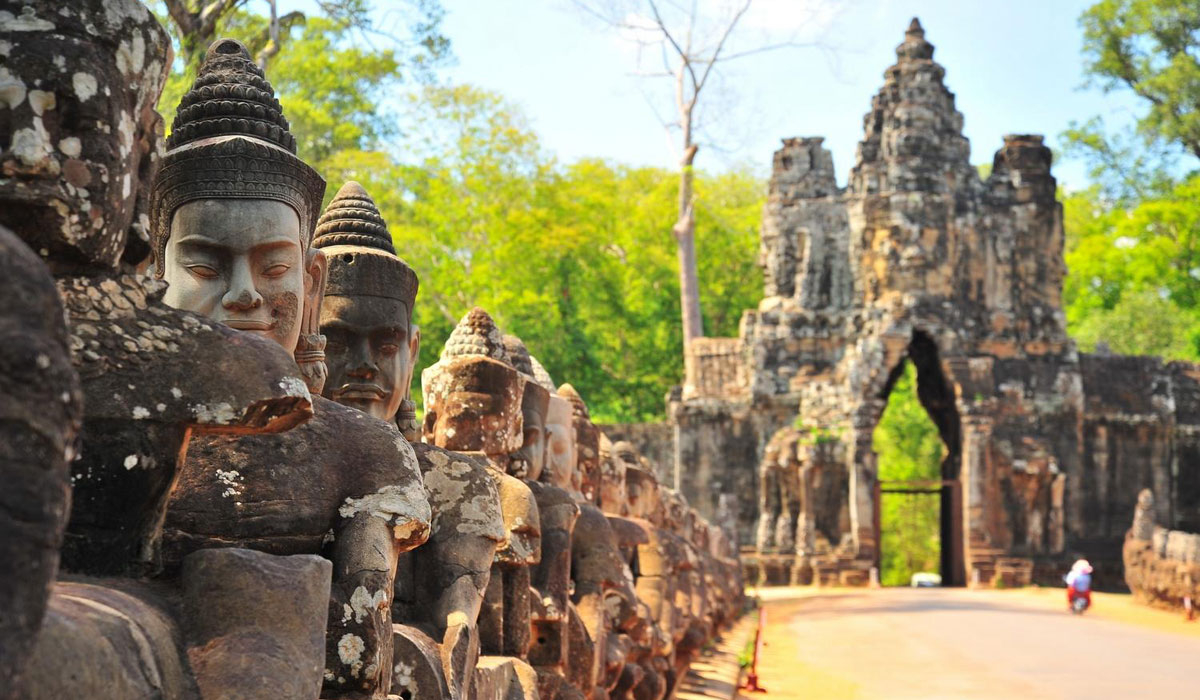
To enter the city, one must pass through one of its five massive gates. Each of the four cardinal directions (north, east, south, and west) features a gate, in addition to the Victory Gate, which leads to the Royal Palace area. The bridges leading to these gates are adorned with statues of gods and spirits, while each gate is crowned by four enormous faces, symbolizing the king’s divine power and protection.
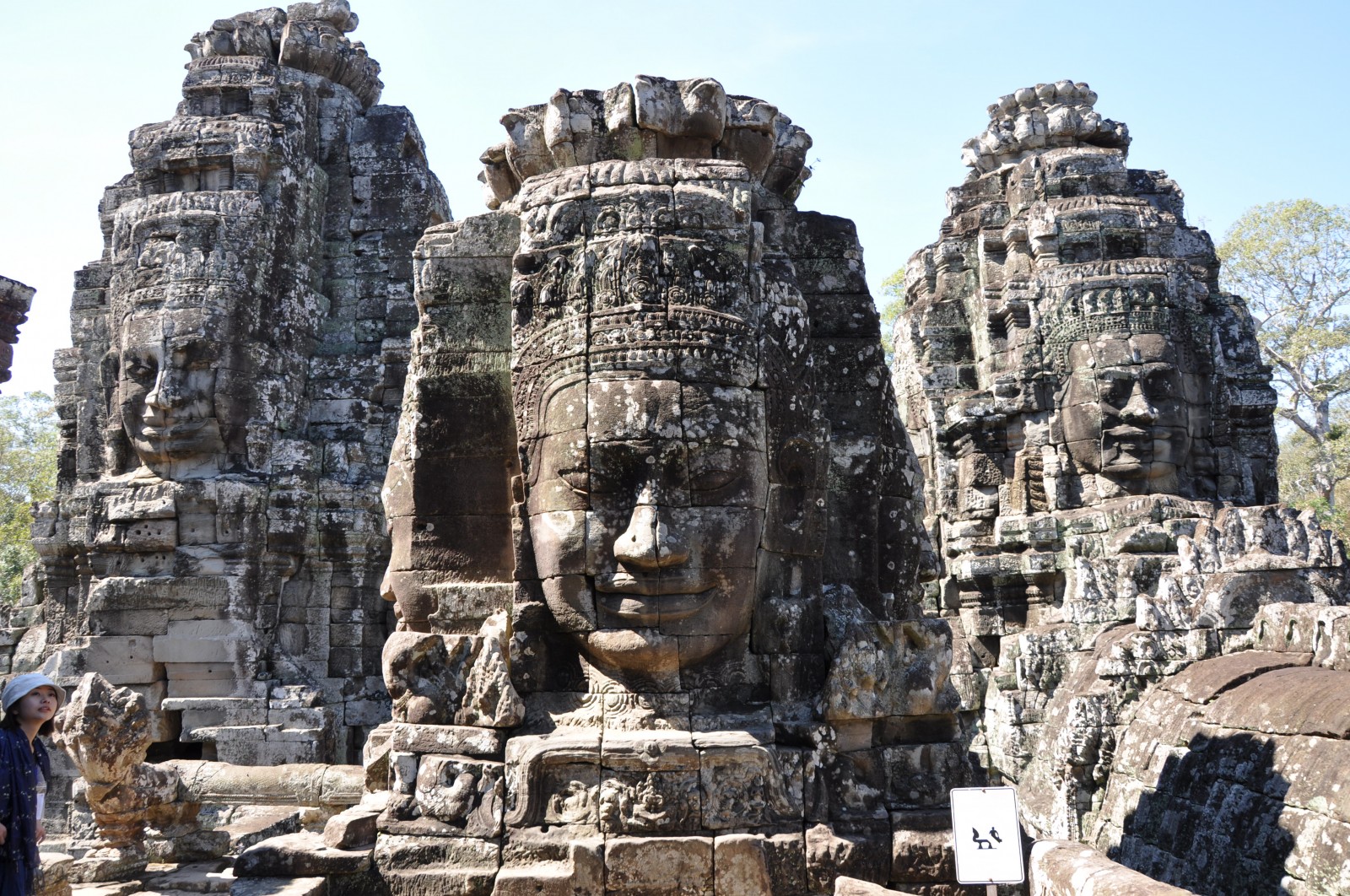
Bayon Temple
Located in the heart of the ancient city of Angkor Thom, Bayon Temple stands as a testament to the grandeur of the Khmer Empire, once the symbolic center of the empire. Originally known as “Jayagiri” (meaning “Victory Mountain”), this state temple was dedicated to Buddha by King Jayavarman VII. It later became known as “Banyan Temple” during the French occupation, inspired by the banyan trees that surrounded the site and held religious significance in the region. The Buddha is said to have attained enlightenment beneath a banyan tree, further connecting the temple to this sacred symbol.
The name was eventually altered to “Bayon,” a result of a local Khmer mispronunciation during the restoration process. Workers, intending to say “Banyan,” instead referred to it as “Bayon,” and the name stuck.
Bayon is perhaps most famous for its serene stone faces, which are among the most iconic images within the Angkor Archaeological Park. To miss the chance to witness these monumental faces would be a true regret. Alongside Angkor Wat and Ta Prohm, Bayon is considered one of the “big three” must-see sites in Angkor. The temple also features an impressive array of intricately preserved bas-relief carvings, depicting a unique blend of historical events, mythology, and daily life—offering a glimpse into the past from every angle.
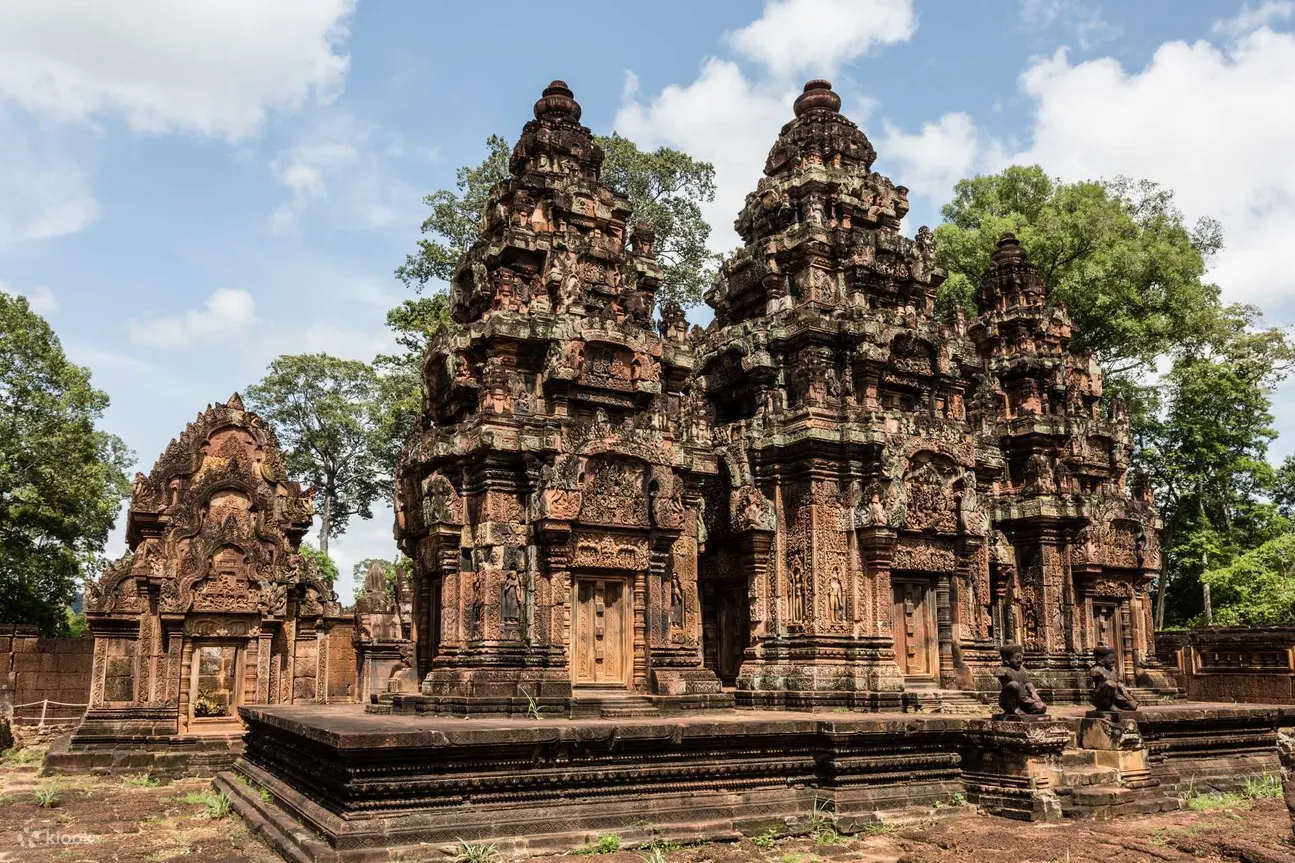
Banteay Srei
Banteay Srei, often hailed as the crown jewel of Angkorian art, is a masterpiece carved from pink sandstone, showcasing some of the finest stonework found anywhere in the world. Though it is one of the smallest temples in Angkor, having been completed in 967 CE, its intricate beauty more than compensates for its modest size. This Hindu temple, dedicated to Shiva and often referred to as the “Angkor Art Gallery,” remains exceptionally well-preserved, with its many three-dimensional carvings standing as a testament to the skill and precision of the artisans.
The name Banteay Srei translates to “Citadel of the Women,” a reference to the delicate, intricate carvings that are believed to be so fine that only a woman’s hand could have crafted them.
Notably, Banteay Srei is one of the few temples in the Angkor region commissioned by a Brahman, possibly Jayavarman V’s tutor. The temple is designed in a square layout, with entrances on both sides connected by a causeway linking the east and west. The three central towers, adorned with male and female deities and stunning filigree reliefs, are particularly striking and offer a glimpse into the divine artistry that defines the temple.
Ta Prohm
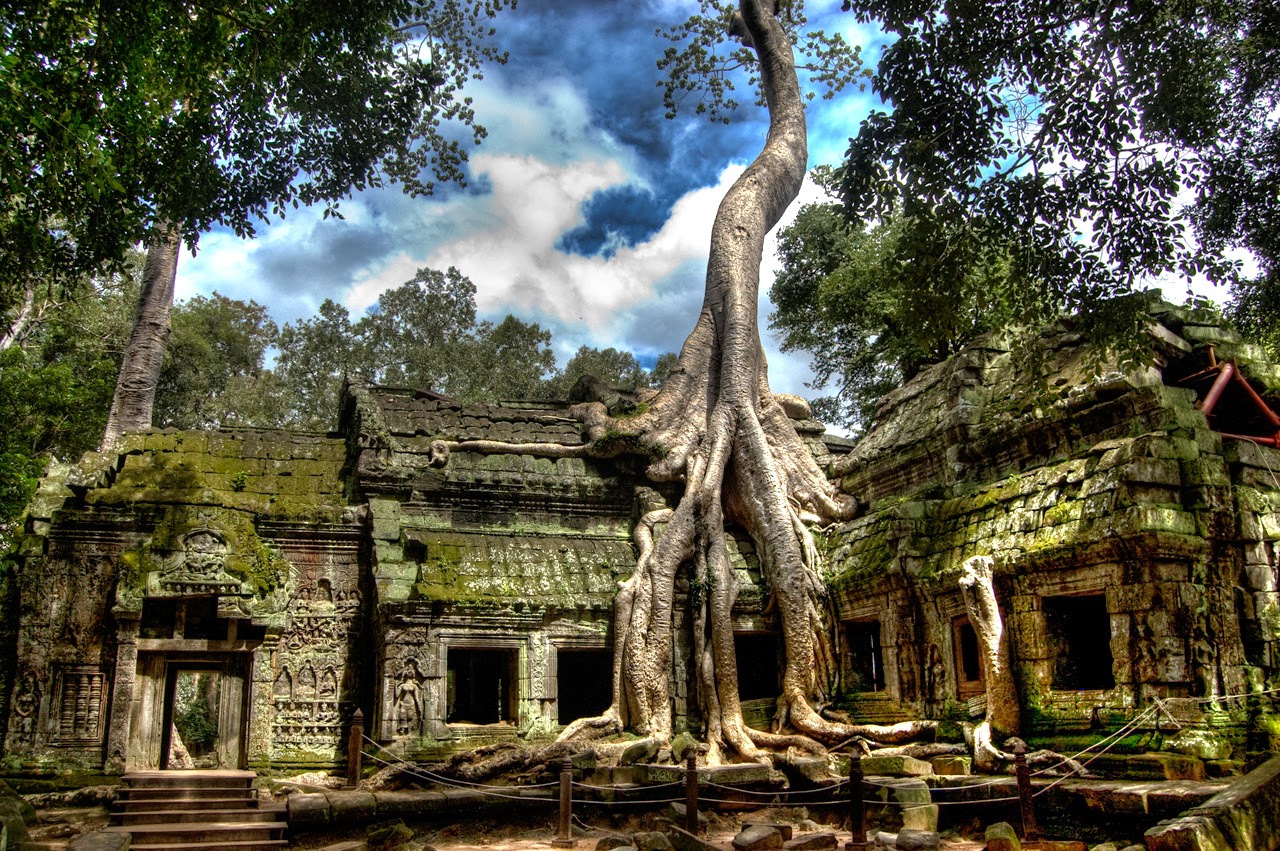
Made famous by its appearance in Tomb Raider, Ta Prohm captivates visitors with its enchanting, mystical atmosphere, evoking the image of a temple lost in the jungle. Remarkably preserved in the state it was found, the temple offers a striking glimpse into the past. Built in the late 12th and early 13th centuries, Ta Prohm shares stylistic similarities with the Bayon Temple, both of which were commissioned by King Jayavarman VII during his reign. Notably, Jayavarman VII’s conversion to Mahayana Buddhism was unusual for the time and influenced the design of both temples.
Constructed as a Mahayana Buddhist monastery and university, Ta Prohm was designed to house around 12,500 people, including priests and dancers. It was also a vibrant center of commerce and culture, employing roughly 80,000 people from surrounding communities. Originally named Rajavihara (meaning “royal monastery” in Sanskrit), the temple was dedicated to honoring the king’s mother, while the nearby Preah Khan Temple was built in memory of his father.
After the fall of the Khmer Empire in the 15th century, Ta Prohm was abandoned and left to the ravages of nature. Restoration efforts only began in the early 21st century, aiming to preserve the temple’s unique beauty and historical significance.
Phnom Kulen National Park
Phnom Kulen National Park, which encompasses the towering Kulen Mountain, is one of Cambodia’s most treasured destinations. Once known as Mount Mahendraparvata, Kulen Mountain is historically significant as the cradle of the Khmer Empire, where in the 9th century, King Jayavarman II declared independence from Java and proclaimed himself the ‘Chakravartin,’ or universal king.
Located just 50 kilometers north of Siem Reap, the park spans nearly 13 kilometers, extending down to the Angkor Plain. Visitors can explore a rich tapestry of ancient temple ruins, sacred carvings, and sculptures, many of which have withstood the test of time. The majority of Phnom Kulen remains undeveloped, offering a rare opportunity to experience the park’s untouched beauty, from its dense jungle and tranquil rivers to its breathtaking waterfalls.
Phnom Kulen National Park is about 30 kilometers from Angkor Wat and can be reached by car, van, or tuk-tuk, with the journey from Siem Reap taking approximately two hours.

TONLE SAP LAKE
The Tonle Sap Lake is Southeast Asia’s largest freshwater lake. It’s also known as Boeung Tonle Sap, and it’s home to one of the world’s most thriving ecosystems. In and around the lake, there are several species of fauna that served to sustain and expand the ancient Khmer empire. It is also known for its intriguing local cultures and floating towns. The gigantic lake, which is located in Siem Reap, is 250 kilometers long and 100 kilometers broad at its widest point, giving it the appearance of an inland ocean because it is impossible to see the opposing shore from ground level. Surprisingly, it’s quite shallow, only 10 meters depth maximum.
In and around Tonle Sap Lake, there are various so-called floating villages, each of which is unique. Many of these villages, therefore, rely on the lake for its natural benefits.
Tonle Sap Lake is best visited during the rainy season (June to October). The Tonlé Sap River reverses its flow as a result of the Mekong’s water, which, when combined with the extra water from upstream, causes the lake to grow to five times its original size during the dry season. The grasslands and woodlands that surround it overflow, resulting in a diversified and rich ecology. It’s also when boat visits to Tonle Sap’s various floating settlements can be arranged. From December to April is the optimum time to visit the bird sanctuaries.

Suggested Itineraries


