
Vientiane
Travel Guide
1. Transportation:
1.1. How to Get There:
Travelers flying into Vientiane typically land at Wattay International Airport (VTE). Common airlines serving this route include China Eastern, EVA Air, Lao Aviation, Thai Airways, and Vietnam Airlines. Alternatively, many visitors choose to fly into Udon Thani, Thailand, and then take a bus to Vientiane, as this route is often much more affordable than a direct international flight. Another popular option is to travel from Bangkok to Vientiane by train. The overnight sleeper train departs daily from Bangkok, taking you directly to the Thanaleng Train Station in Laos. From there, you can easily catch a local bus or tuk-tuk to the city center.
1.2. Getting Around the City:
Vientiane is a fairly walkable city, especially in the central areas, making it easy for visitors to explore on foot. Bicycles are another great option for getting around; rentals typically cost between 10,000 and 20,000 Kip per day, making it an affordable choice. For longer distances, taxis and tuk-tuks are readily available. While services like Uber and Grab are not operational in Laos, the local ride-sharing app LOCA offers a more budget-friendly alternative. Vientiane also has a bus system, but it primarily serves the outskirts of the city, which are less likely to be of interest to tourists.
2. Best Time to Visit:
The ideal time to visit Vientiane is between November and February when the weather is cooler with a pleasant warmth. During these months, the city attracts many visitors, so expect more tourists. If you’re planning to visit in April, be prepared for hot and humid days. However, this is also a fantastic time to experience the local New Year’s water festival, which provides a unique opportunity to see how the locals beat the heat. The Vientiane version is much more relaxed than Thailand’s famous Songkran festival but equally enjoyable.
Places Of Interest
Buddha Park: A Quirky Oasis of Sculptures
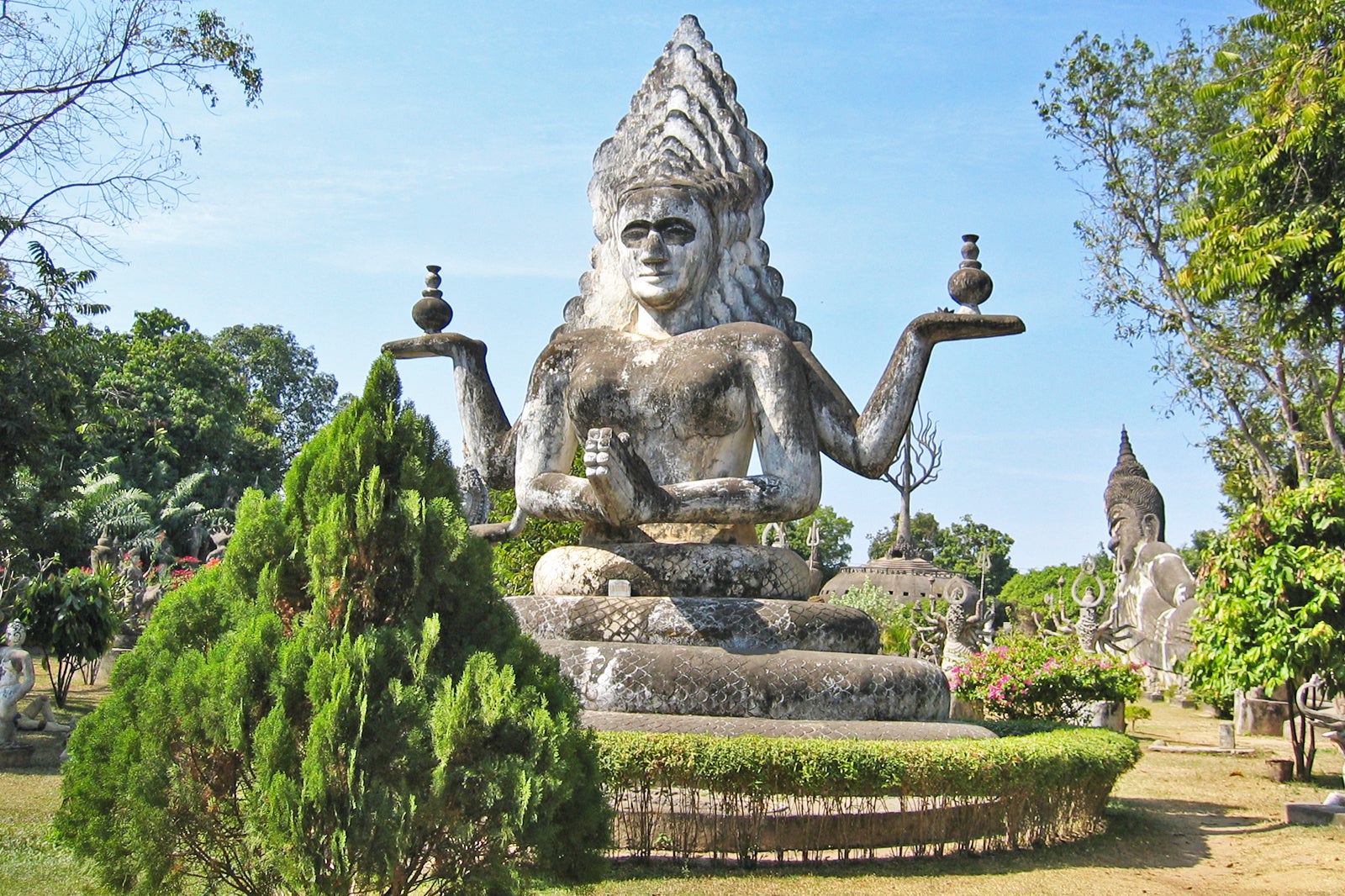
Buddha Park, also known as Xieng Khuan or Xiengkuane Buddha Park, is a fascinating and unusual attraction located 25 kilometers southeast of downtown Vientiane, along the banks of the Mekong River. This expansive park features a vast riverfront meadow dotted with over 200 massive ferro-concrete sculptures, depicting both Buddhist and Hindu figures.
Established in 1958 by Luang Pu Bounleua Sulilat, a Laotian monk who later migrated to Thailand, the park is a blend of religious and mythological themes. After leaving Laos, Sulilat went on to create a similar sculpture garden called Sala Keoku in Nong Khai, Thailand, on the opposite side of the Mekong River.
The sculptures in the park vary in size, ranging from small to monumental, and include depictions of Buddha, Hindu gods, demons, and mythical creatures, such as a colossal three-headed elephant. Over time, the elements have weathered these statues, giving them an ancient and eerie feel.
Among the park’s most striking features is a three-story giant pumpkin sculpture, which stands as one of the most remarkable creations. A mythical creature guards the entrance, its wide-open mouth serving as the doorway to the pumpkin. Inside, visitors can climb a stairway leading through the three levels of the structure, each representing Hell, Earth, and Heaven. At the top, a viewing platform offers a stunning panoramic view of the park.
Although some of the sculptures, like the giant reclining Buddha, are revered by local Buddhists, Buddha Park is not considered a temple but rather a unique open-air gallery blending art, mythology, and spirituality.
Pha That Luang
Pha That Luang, the national symbol of Laos, was built in the 16th century. This grand golden stupa, located in Vientiane, is believed to enshrine a relic of the Buddha—a breast bone. Officially known as Pha Chedi Lokajulamani, which translates to “World Precious Sacred Stupa,” Pha That Luang is one of Laos’ most important religious and cultural landmarks.
After Vientiane became the capital of Laos in 1566, King Setthathirat commissioned the construction of the stupa, which stands as a testament to Lao architectural and spiritual heritage. The main entrance is guarded by a statue of the former Lao king, adding to the site’s historic significance. The central stupa, surrounded by intricately painted turrets, rises 44 meters above the ground.
In 1827, much of Vientiane was destroyed and looted by Siamese invaders, and Pha That Luang suffered extensive damage. It was eventually abandoned but was carefully restored by the French in the 1930s, returning it to its original style.
Today, Pha That Luang is listed on the UNESCO World Heritage Tentative List, recognizing its immense cultural and historical value to Laos and the world.
.jpg)
Patuxai Victory Gate
At the end of Lane Xang Avenue, leading to the Presidential Palace, the Patuxai Victory Gate stands proudly in the heart of Vientiane. Known as Patuxay, meaning “Victory Gate,” this imposing concrete monument evokes the grandeur of Paris’s Arc de Triomphe, with a broad avenue that directs attention toward it. Constructed in the 1960s, Patuxai is a tribute to those who gave their lives in service to Laos during various conflicts.
The monument is distinguished by five towering structures, designed in traditional Laotian architectural style, and embellished with Buddhist symbols and Hindu deities. The four corner towers and the central fifth tower embody the five Buddhist virtues: mindful amiability, flexibility, honesty, honor, and wealth.
Visitors can climb a staircase that leads through multiple levels, which feature offices, souvenir shops, and vendors selling drinks and snacks. At the summit, the five Laos-style towers with delicate floral designs adorn the monument, while golden finials crown the four corner towers and the larger central one. From the observation deck, accessible via a spiral staircase inside the central tower, visitors are treated to sweeping views of Vientiane and the Mekong River.

Ho Phra Keo
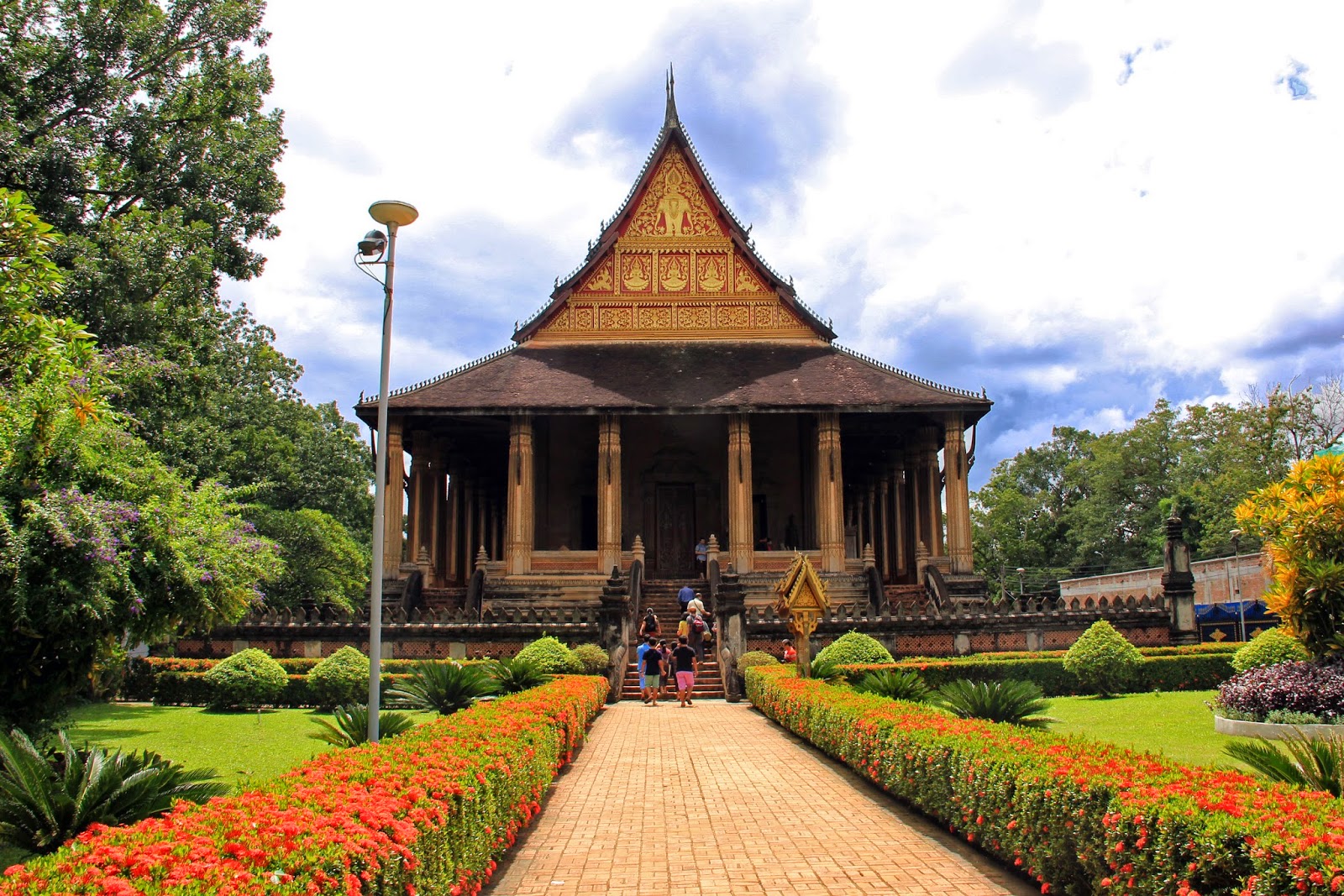
Ho Phra Keo (also known as Haw Phra Kaew) is a former Buddhist shrine in Vientiane that now serves as a museum of religious art. Established in 1565, it is famed for housing the gilded throne built for the Emerald Buddha, which now resides at the Grand Palace in Bangkok. Because of this, locals refer to it as the “Temple of the Emerald Buddha.”
When King Setthathirath moved the capital of the Lan Xang Kingdom to Vientiane in 1565, he commissioned the construction of Haw Phra Kaew to serve as the royal temple and house the Emerald Buddha. The statue remained here until 1779, when it was transported to Thailand. Since then, it has been kept at Wat Phra Kaew in Bangkok, within the Grand Palace complex.
In 1827, the Siamese army stormed Vientiane, and the Haw Phra Kaew was destroyed. The temple has undergone several renovations since then, with the current structure dating back to 1942 when the French restored it. The shrine is surrounded by meticulously maintained gardens, adding to its serene and historical charm. Among the museum’s intriguing exhibits is a 2,000-year-old stone jar from the Plain of Jars, a rare and fascinating artifact from Laos’ ancient past.
Wat Si Keo
Wat Sisaket, the oldest temple in Vientiane, is located on Setthathilat Road, east of Nam Phou. Built in 1818 by King Anouvong (Chao Anou), this monastery served as the site where Lao lords and nobles swore their loyalty to the king. It was the only monastery to survive the Siamese sack of Vientiane in 1828. After the destruction, the Siamese gathered the surviving Lao nobility here and forced them to swear an oath of loyalty to their new conquerors. In 1893, the same ritual was performed in front of the French, who had become the new rulers of Laos.
The temple’s sim (main hall), surrounded by a tile-roofed courtyard, features exquisite artwork reminiscent of Bangkok’s Wat Phra Kaew. Visitors can admire the murals, the niches in the upper walls that house miniature Buddha figures, and the intricate ceiling—best appreciated while kneeling on the floor (taking care to avoid pointing your feet toward the altar). While the Buddha figures on the altar are simple, a carved wooden candle holder placed before it is a fine example of 19th-century Lao woodcarving.
